
The swim
The route
27 kilometres from Playa de Rodas, in the Cíes Islands, to the island of San Simón, the length of the Ría de Vigo.
- 0kmCíes Islands
- 10kmBorneira buoy
- 20kmPunta Arroás
- 24kmRande Bridge
- 27kmSan Simón Island
The crossing, in three legs
Leg 1 · to the Borneira buoy
10km covered
Open water from Playa de Rodas, across the mouth of the ría towards the Cangas shore.
Leg 2 · to the Rande Bridge
24km covered
The ría begins to narrow. This is where the current starts to matter.
Leg 3 · to the island of San Simón
27km covered
Under the bridge and into the inlet on the rising tide.
Start
9:00 am
of the first wave
Distance
27km
end to end
Water
14–18ºC
in June, 57–64 ºF
Duration
10h
to the last swimmer
How it is swum
Swum with the ría, not against the clock
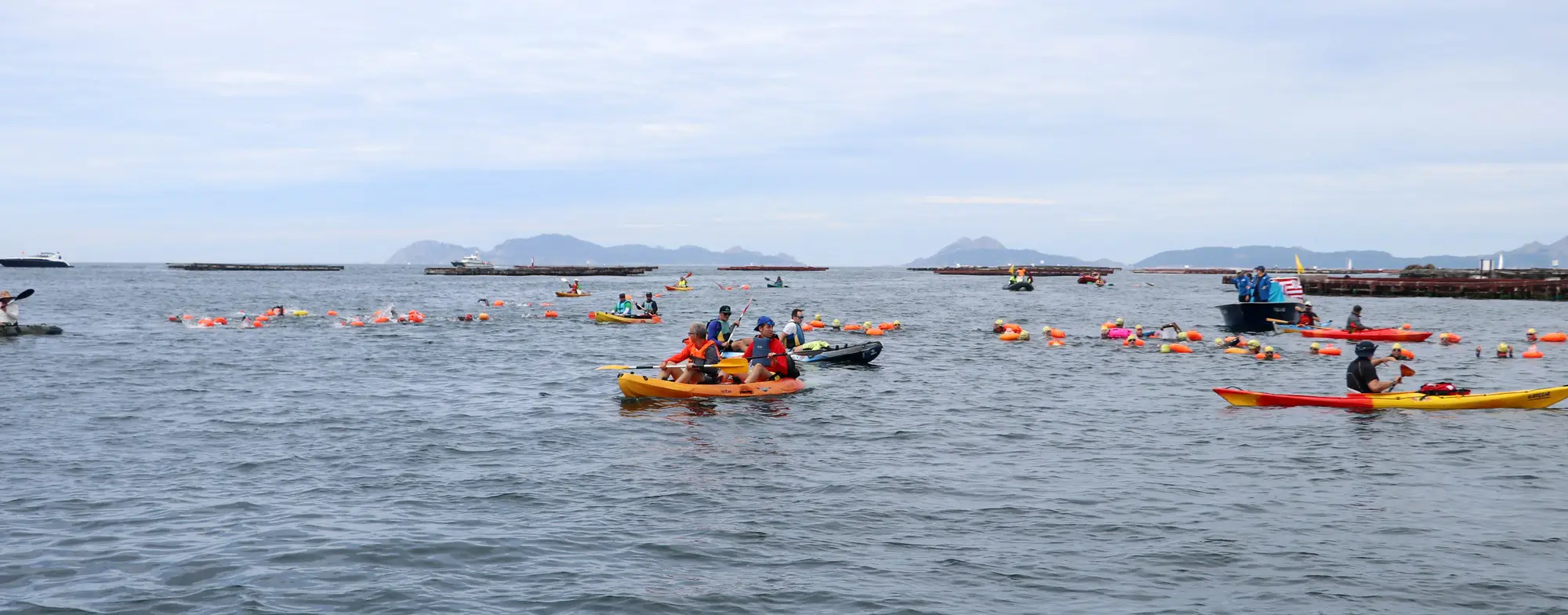
Waves set off by pace from 9:00 am, and there are seven feed stations along the route.
The day runs about ten hours, from the start until the last swimmer passes under the Rande Bridge. If fog delays the start, that time comes off the end: the swim gets shorter, not longer.
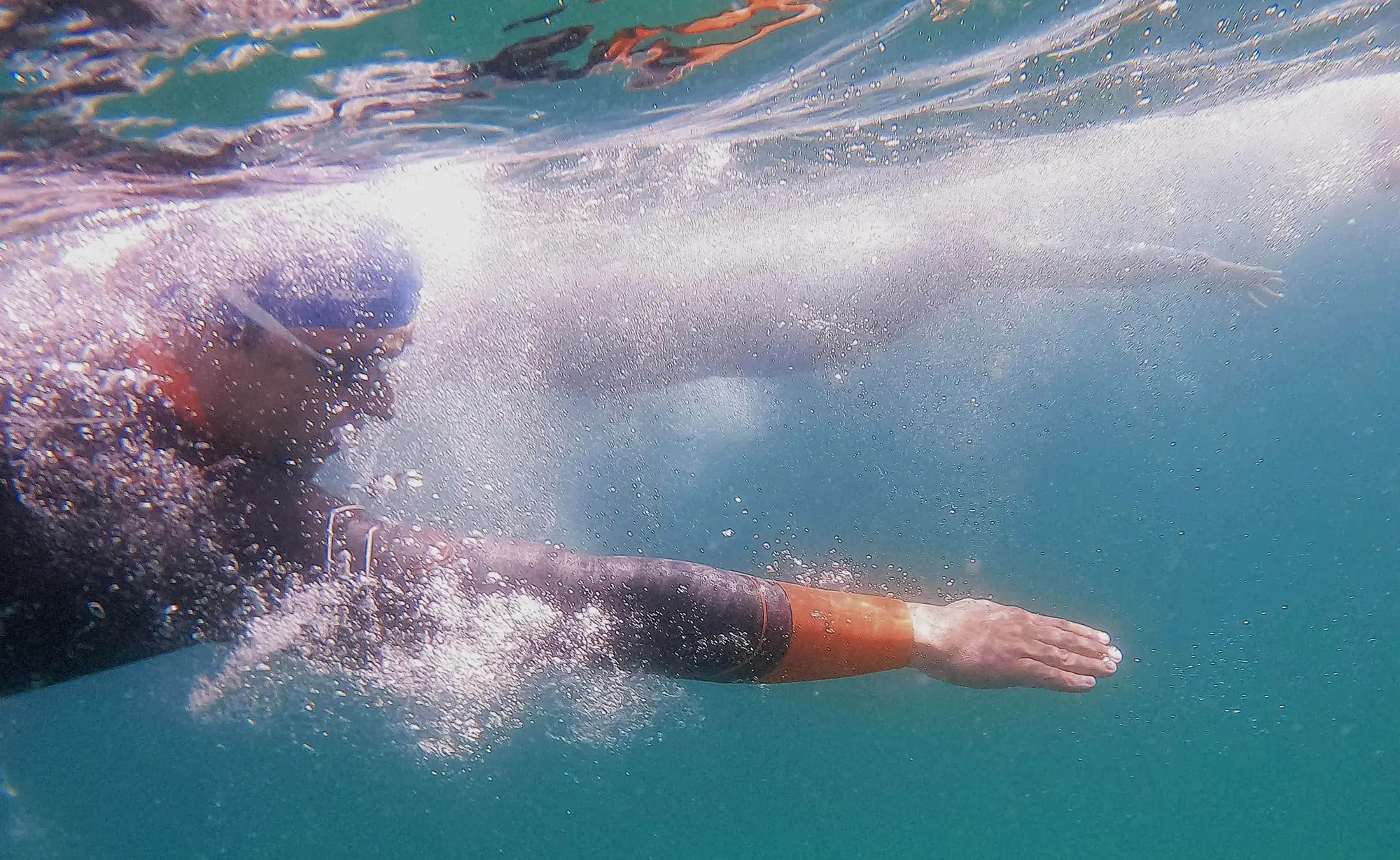
It is not only the distance that makes this crossing hard. It is three things at once: the 27 kilometres, the currents in the ría, and water that in June sits between 14 and 18 ºC — 57 to 64 ºF.
Kilometre 0
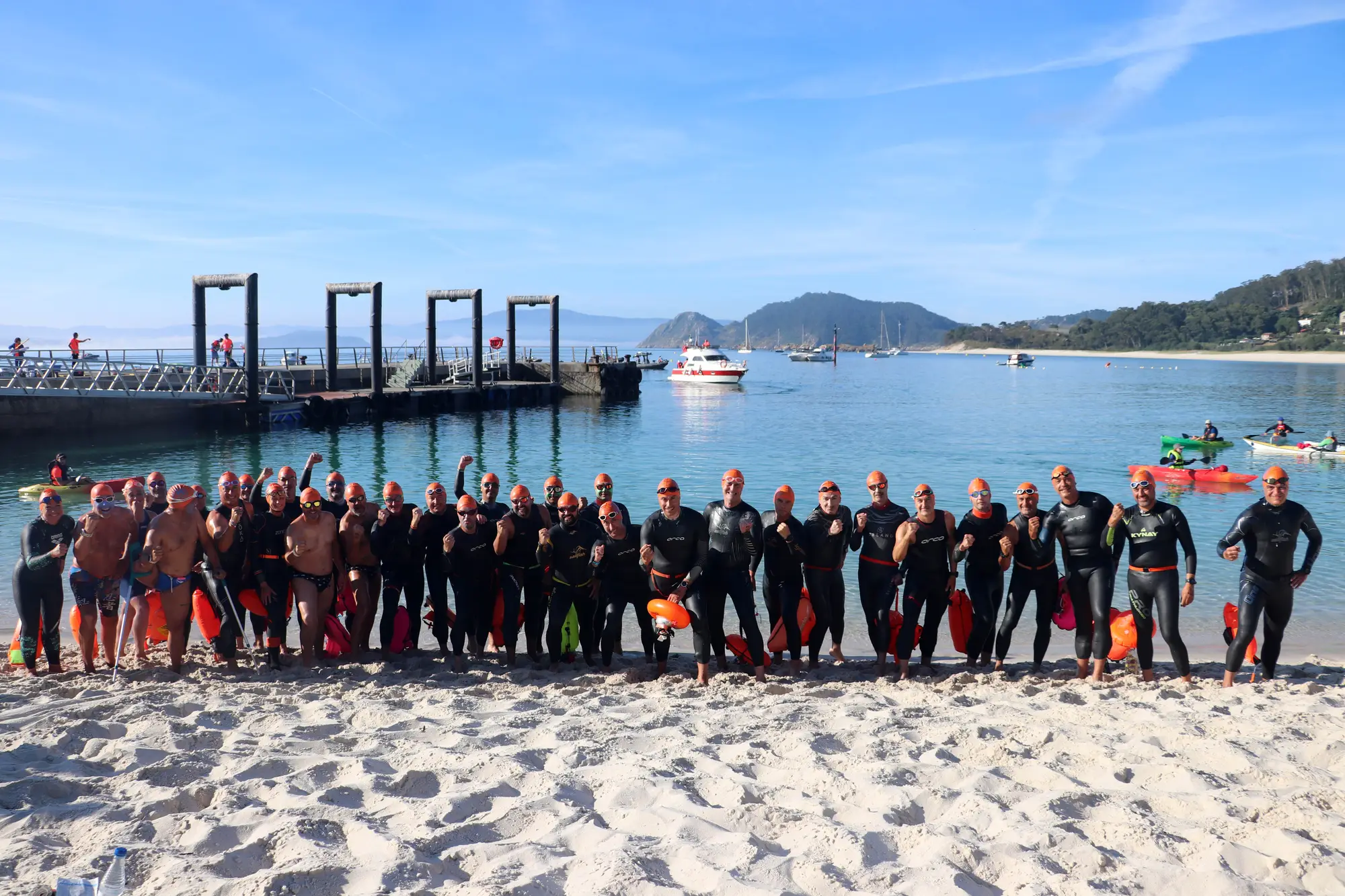
It all begins at Playa de Rodas
The waves set off from here, by pace, heading for the mouth of the ría and open water.
What you swim past
This is no ordinary channel
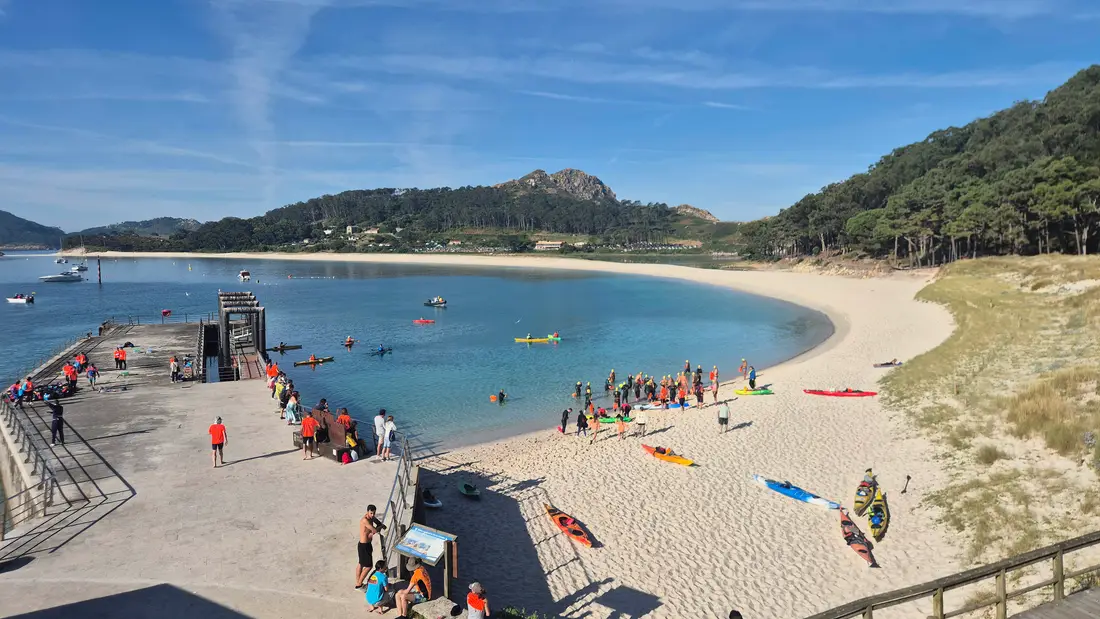
Kilometre 0 · the start
Cíes Islands
The swim starts from Playa de Rodas, inside the Atlantic Islands of Galicia National Park. A national park as a start line is not decoration: it governs the permits, how many boats may enter and the coordination with the park itself.
Kilometre 24 · the narrows
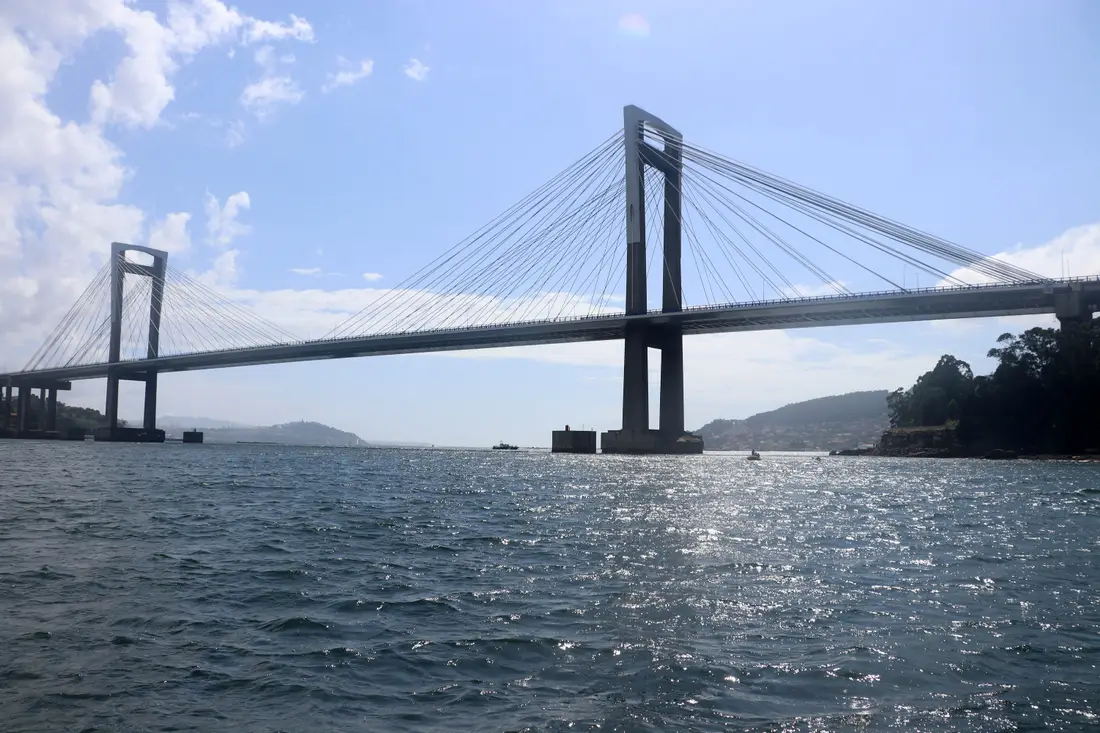
Rande Bridge
The point where the ría closes in before opening into the inlet, and so where the currents bite hardest. It is also what gives the swim its name: a naval battle was fought beneath these waters in 1702, during the War of the Spanish Succession, between an Anglo-Dutch fleet and the Franco-Spanish one escorting the treasure galleons from the Indies. The sunken ships fed the legend of the Rande treasure for centuries — the one Jules Verne put into Twenty Thousand Leagues Under the Sea.
You swim over a battlefield.
Safety cover
Nobody swims alone
The organisers are in live radio contact with the Guardia Civil, the Vigo Harbourmaster and the harbour pilots. Wave leaders and race directors are spread along the whole route, alongside the support boats and the rescue team.
The ría does not close for the swim
Vigo is a working ría, not a closed course. While the swimmers cross it, the port keeps running:
None of it stops: it is coordinated. That is why the harbour pilots are among the people on the radio — they are the ones who steer the large vessels in and out. The swim occupies a time window agreed with all of them in advance.
Which is why the timings cannot move. It is not the organisers being rigid: that window has been agreed with the port and cannot be shifted on the day. It is also why a delayed start shortens the swim rather than extending it.
For one day, every vessel in the Ría de Vigo works around an open-water swim.
Minimum conditions to start · set by the Vigo Harbourmaster
Visibility
5nautical miles
Wind
11knots · force 3
Waves
1metre
Below any one of these thresholds the swim does not start. The decision to delay or call it off rests with the race director, always within the limits set by the Harbourmaster.
Fifteenth edition · Saturday, 26 June 2027
Now you know what it is. Time to swim it.