
The ría
Twenty-seven kilometres of ría, told from inside the water
A ría is a valley the sea flooded. That is why this one is not a still pool: it has currents, it has tides that empty and fill it twice a day, and it has a floor that rises and falls like the valley it once was.
From the mouth to the head is 27 kilometres by water. We swim it once a year. This page is what you see along the way, and not from a viewpoint.
Kilometre 0
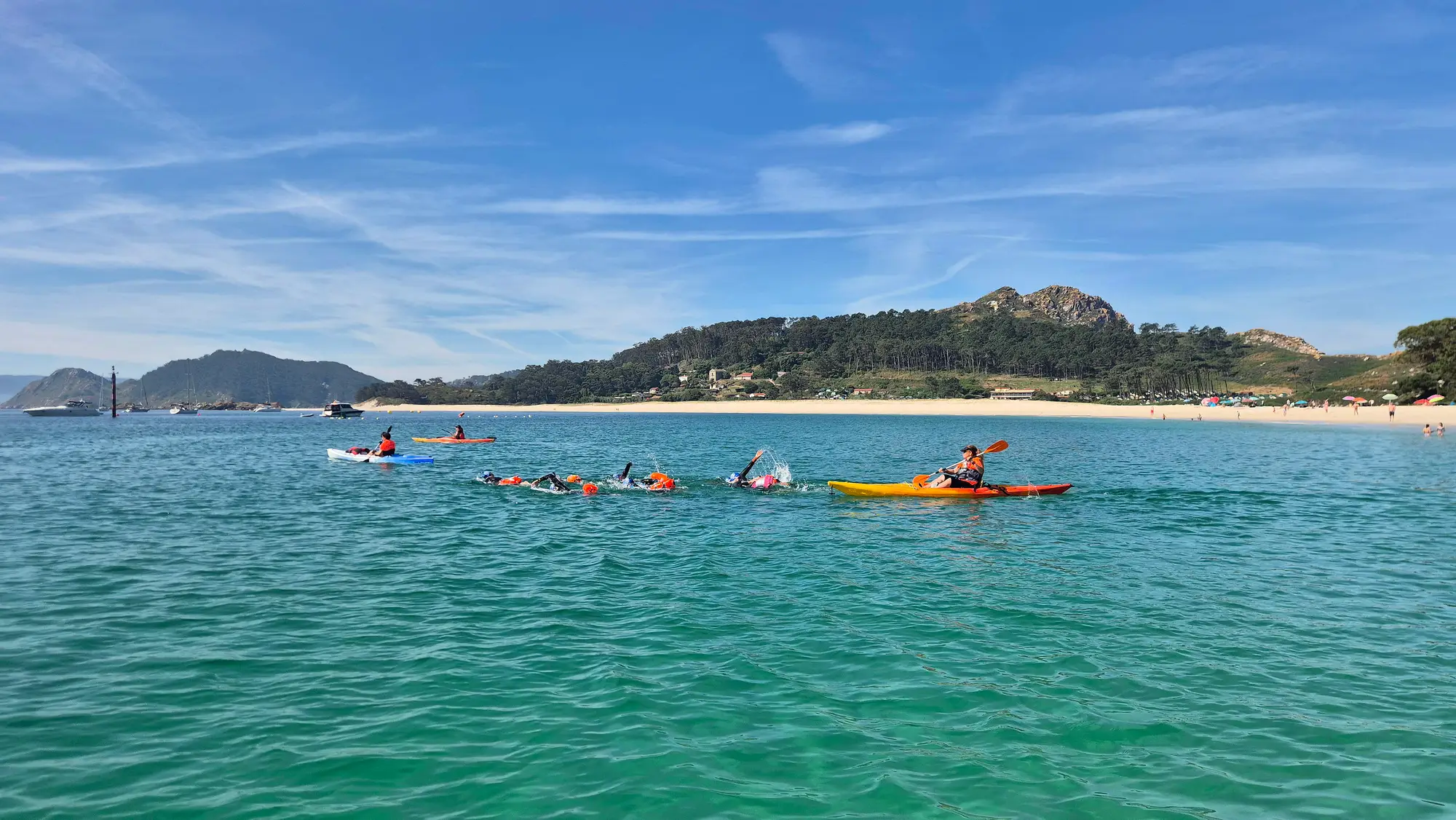
The Cíes are not islands off the coast: they are the gate
The Cíes Islands close the mouth of the ría. They are the maritime part of the Atlantic Islands National Park, and the number of people allowed to set foot on them each day is capped: you need a permit before you buy the boat ticket.
From the water you grasp something the beach does not show you: the Cíes do not sit in front of the ría, they sit in its doorway.
Kilometres 0 to 20
This is a working ría, not a protected landscape
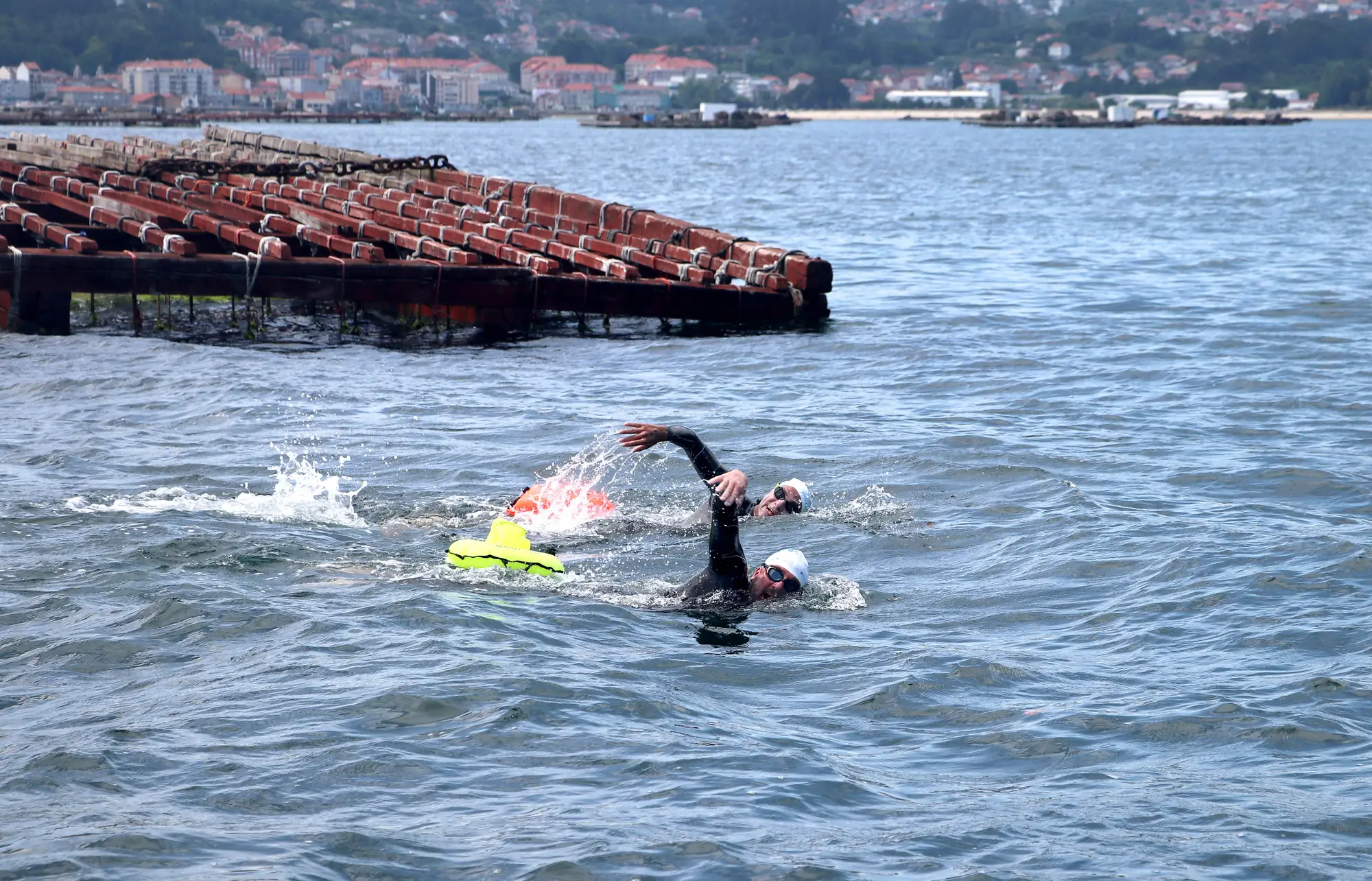
Between the islands and the narrows, the ría is a busy place. Cargo ships and trawlers heading into the port of Vigo, the ferries crossing to Cangas and Moaña, and the mussel rafts moored all along the shore.
That is the difference from a postcard, and it is worth knowing before you come: those rafts you can see from any viewpoint are mussel farms. A working industry, not scenery. This ría earns a living.
Kilometre 24
Where the ría closes before it opens again
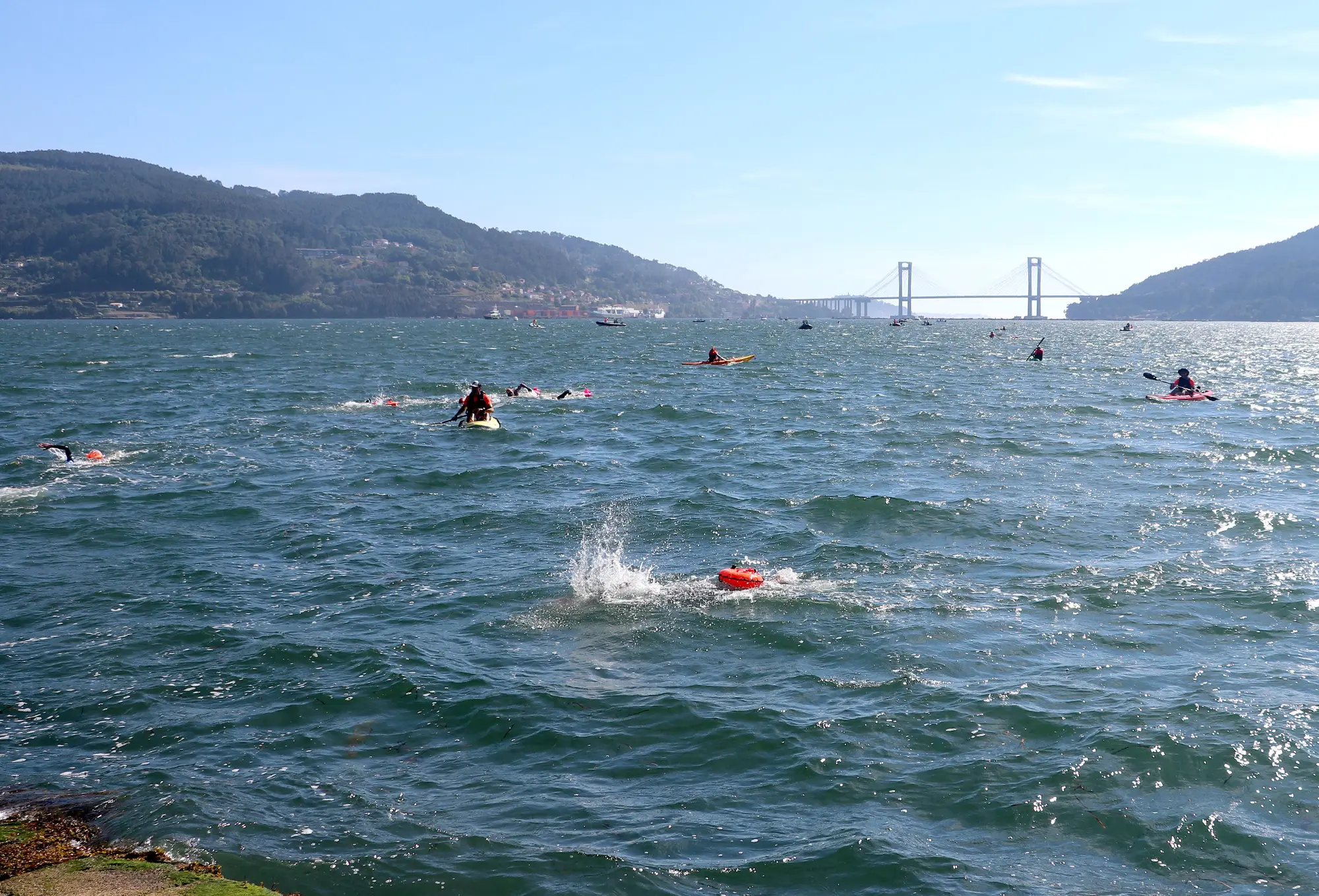
The Rande Bridge crosses at the narrowest point. From below it is a different thing entirely: the piers rise straight out of the water, the deck passes far overhead, and for a few minutes you swim in its shadow.
A naval battle was fought underneath it in 1702, and that is where this swim gets its name. We tell that story — and the treasure Jules Verne left on the seabed — in full on the race page.
Kilometre 27 · the finish
An island that has been many things
The swim ends in the bay of San Simón, an almost enclosed inlet at the head of the ría. In the middle of it are two small islands joined by a stone bridge: San Simón and San Antón.
13th century
The island appears in the oldest surviving poem written about it. The troubadour Mendinho left a single song, and he set it here: a young woman waits at the chapel of San Simón as the water rises around her. The island now holds a monument to the three poets of this ría — Mendinho, Martín Codax and Johán de Cangas.
1838 – 1927
In 1838 the island became a quarantine station: the place where ships arriving from the Americas waited before they were allowed in. The sick were held on San Antón and everyone else waited on San Simón. It worked that way for nearly ninety years.
1936 – 1943
From 1936 it was a concentration camp. On paper it was a penal colony; what it held were political prisoners — republicans, socialists, communists, anarchists — packed into the old quarantine buildings, in conditions that killed hundreds of them.
Today
The island has been restored and can be visited with a guide, mostly in summer, by boat from Vigo, from Cesantes and from Santo Adrán de Cobres. There is an interpretation centre that tells both histories, and a walk between century-old box trees.
And one Saturday afternoon a year, more than a hundred people arrive at it swimming.
2027
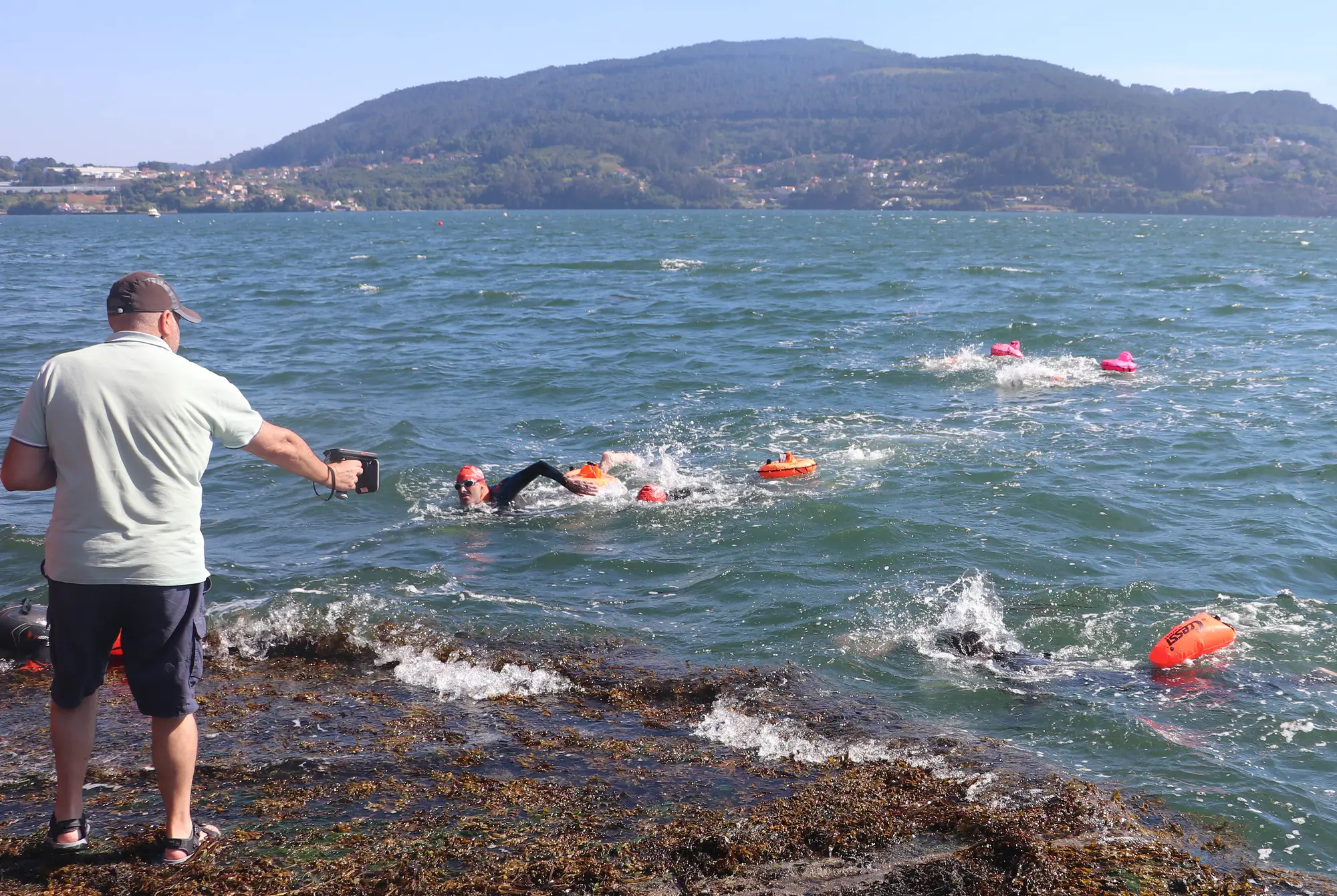
The year of the next swim is a Holy Year
25 July 2027 falls on a Sunday, which makes 2027 a Xacobeo — a Compostelan Holy Year. They are not chosen: they depend on the calendar, and the next one after this is not until 2032.
If you are coming to swim, or coming with somebody who is, it means your trip lands in the year Galicia receives the most visitors. Book early: beds, boats and the Cíes permit.
Getting there
The doors that actually matter
This is not a travel guide. These are the places you need in order to arrange the visit, and nothing else.
Cíes Islands. You need a park permit before buying the boat ticket. Both, and the days the boats run, are on the park's official site.
Atlantic Islands National ParkIsland of San Simón. Visited with a guide, mostly in summer, sailing from Vigo, from Cesantes (Redondela) or from Santo Adrán de Cobres (Vilaboa).
The boats. Nabia, who help run this swim, sail both routes: the Cíes and San Simón.
Nabia
And if you fancy seeing it from the water
This is swum once a year, on the last Saturday in June. Registration opens in October.